
Registering a Property Deal at Thailand's Land Department: What Happens on the Day
Registration at the Land Department is the final and most formal step in a deal — without it, ownership doesn't legally transfer, no matter how much money has already been sent. Here's exactly what happens on that day.
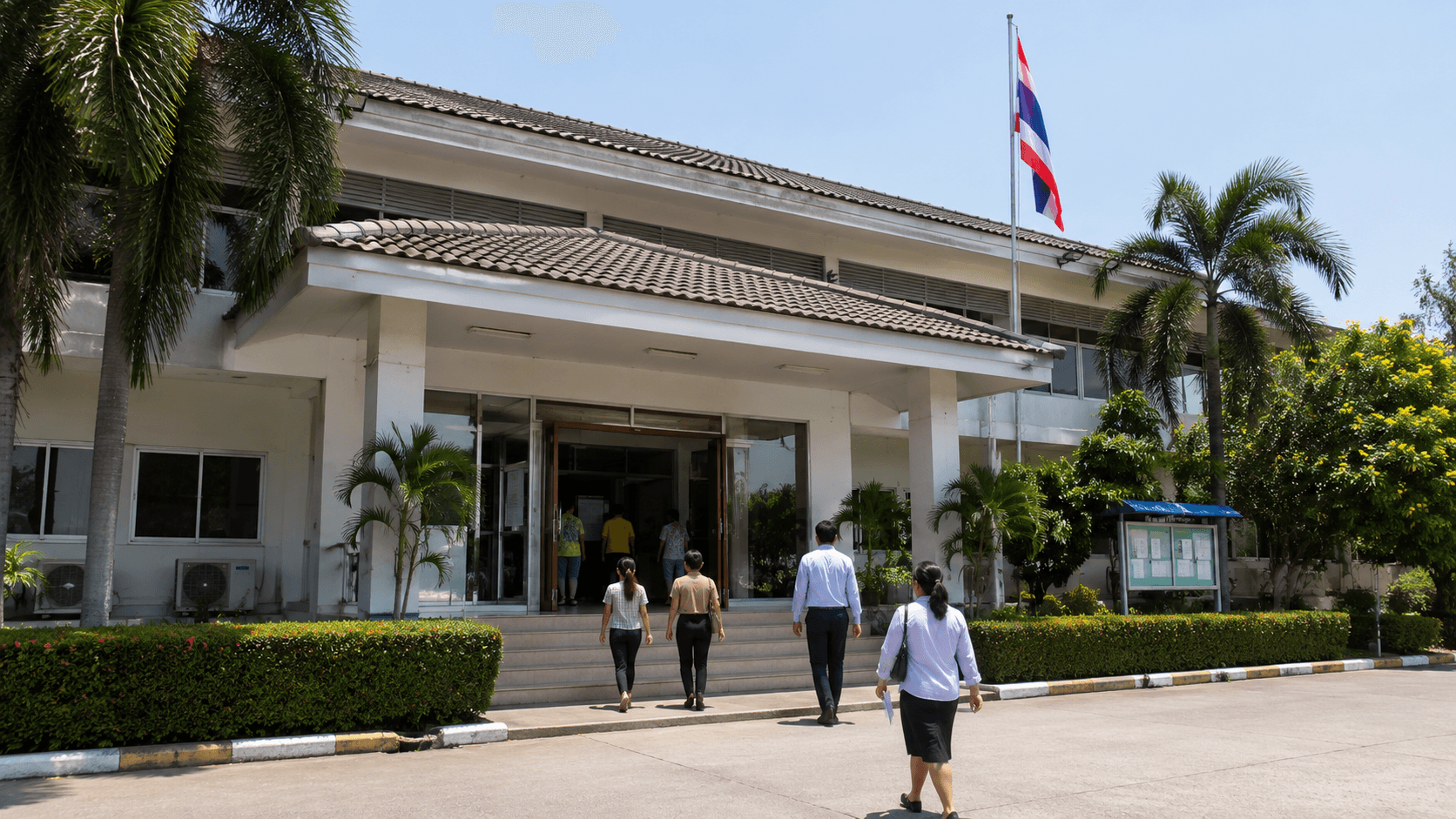
What the Land Department officer checks
On registration day, the Land Department officer checks the entire package of conditions at once, not one at a time: the title document (a Chanote or another title), for a condominium, confirmation of the remaining foreign quota from the condominium's juristic person, the document confirming the foreign currency transfer — an FET or Credit Advice — in the buyer's name, and payment of the applicable fees and taxes. If even one piece of this package is missing or doesn't match the rest — for example, the FET amount is lower than the contract price — the registration will most likely be postponed that day.
The document package for registration day
Here's what's typically needed on the day of the visit:
| Document | Always needed | Condominium only |
|---|---|---|
| Buyer's passport and a copy | Yes | |
| Sale and purchase agreement | Yes | |
| FET or Credit Advice in the buyer's name | Yes | |
| Original letter from the condo's juristic person confirming the quota | Yes | |
| Notarized power of attorney (if the buyer isn't attending in person) | Situational |
If the buyer is married, additional confirmation of the property's marital status may be needed depending on how the purchase is structured. The exact list is worth confirming in advance with the developer, the seller, or the lawyer handling the deal — it can vary depending on the specific Land Department office and the type of property.
What if the buyer can't attend in person
If the buyer can't travel to Thailand in person for registration day, the deal can be handled through a representative under a notarized power of attorney that explicitly grants the representative the right to sign the registration documents for the transfer of this specific property on the buyer's behalf. The power of attorney should spell out the authority as specifically as possible — not a general "representing interests" clause, but a direct grant of the right to register the transfer of this particular property, referencing its address or title number. Preparing and legalizing this kind of power of attorney is a separate process that's worth starting well in advance, not in the final week before the planned registration date.
The official procedure
The step-by-step structure of the procedure itself — from securing a place in the queue to receiving the title deed. One detail from the official process is worth calling out separately, since it's easy to miss when planning a date:
The first-come-first-served queue format means actual wait times at a given office can vary considerably depending on how busy it is and the day of the week — some Land Department offices in popular tourist areas process noticeably more applications during high season than the national average. It's worth planning registration day with some buffer, rather than scheduling it right up against a return flight.
Everything that precedes this day — transferring the money into Thailand, converting it into baht, and preparing the FET or Credit Advice — is worth finishing well ahead of time, rather than counting on wrapping it all up the same day as the office visit. EXFM handles that transfer: converting a client's funds into baht and making sure the full document package is in hand by registration day.
Further reading: the official website of Thailand's Department of Lands — dol.go.th, the department's official English glossary of Land Code terminology — Vocabulary from The Land Code — and the official description of the registration procedure on the thailand.go.th portal.