

Rufat Mamedov
Came to Thailand for 3 months — best rate I found, excellent service, Russian-speaking team, needed cash urgently and they delivered to my door. Thank you!
- 3
- Yandex Maps

Bank of Thailand license MC225670007
Guaranteed transactions and an office network across Thailand
Fast processing — within 5 minutes
No hidden fees — clear and honest exchange rates
Lifetime payouts — clients stay linked to you with no time limit
Full transparency and detailed stats in your partner dashboard
Tracking captures partner ID even for offline ruble exchange at a branch
Verified Telegram channel with financial analytics for work and business in Thailand
Instagram and YouTube about life in Thailand from experienced expats who know how to make tropical living comfortable
Expert articles on finance and buying property in Thailand

Currency exchange in Bangkok is an easy place to lose money to a poor rate or a hidden fee. This guide covers where and how to exchange money in the city, what a licensed service like EXFM (Bank of Thailand license No. MC225670007) offers, and how to avoid the tricks used by unlicensed street changers.
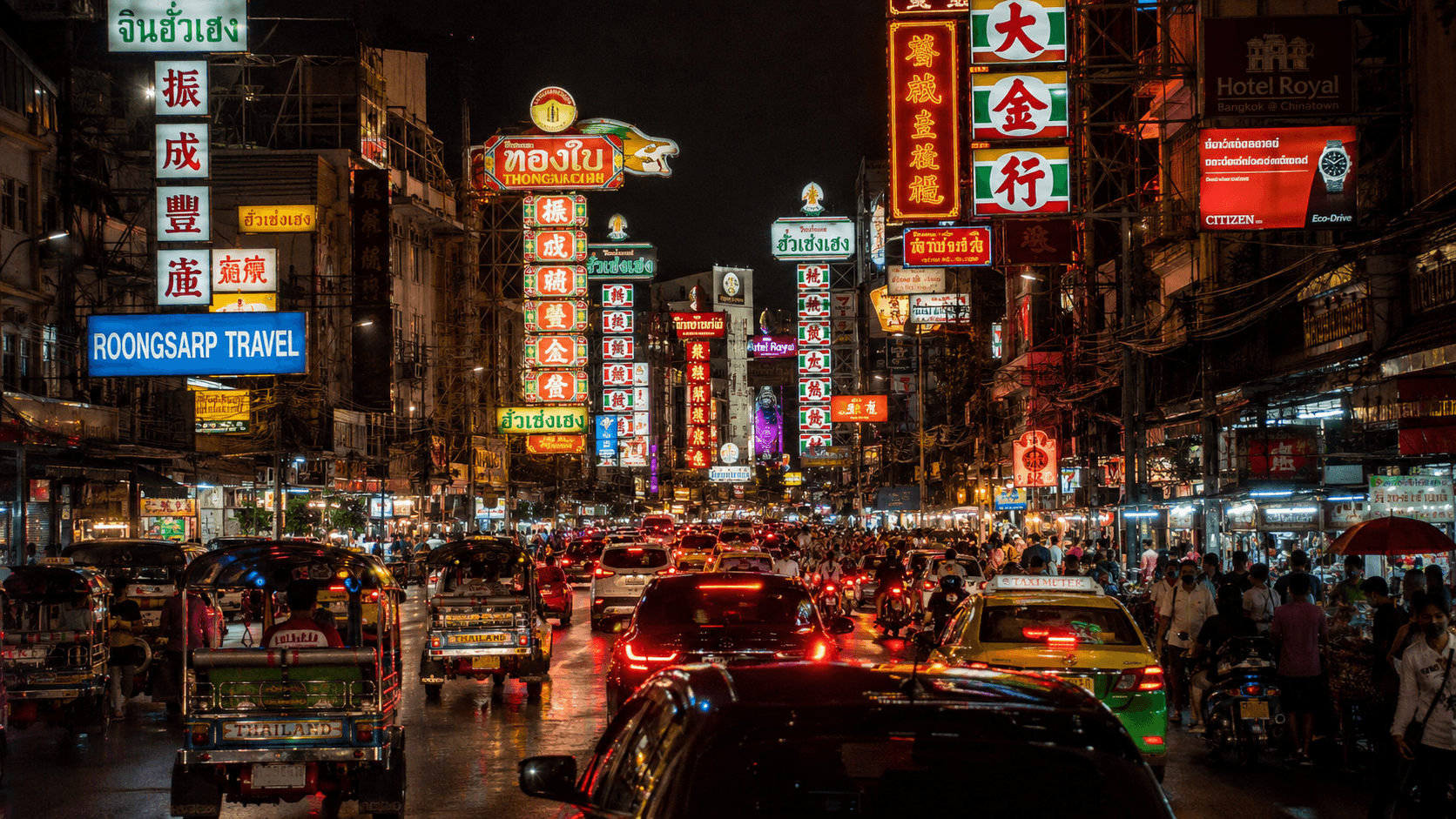
Bangkok is Thailand's capital and its largest financial hub, with hundreds of exchange counters spread across the city. The official currency is the Thai baht (THB). To get the most out of your trip, it helps to know where and how to exchange money for the best rate.
In Bangkok you can exchange most major currencies: US dollars, euros, British pounds, Chinese yuan and others. The rate you get depends on where you exchange, the denomination and condition of your banknotes, and current market conditions.
Banknotes circulate in denominations of 20, 50, 100, 500 and 1,000 baht. By law, goods and services in Thailand must be paid for in the local currency — paying directly in dollars or euros is possible in a few tourist spots, but at an unfavorable rate.
Compare rates
Rates vary between exchange counters, sometimes by 2-5%. Before exchanging a large sum, check rates in a few places. Current rates are often published online, including the rate widget on the EXFM website.
Watch for hidden fees
Licensed exchange services typically charge no extra fees — everything is built into the rate. Street changers may add hidden charges. Confirm the final amount you'll receive before exchanging.
Bring your passport
Exchanging currency in Thailand requires a passport, for any amount. Carry the original document with you.
Timing matters
Rates update daily, and mornings are sometimes slightly more favorable. For larger sums, this difference adds up.
Exchange in larger sums
For significant amounts (from around $1,000), you can often negotiate a better rate directly with a service manager.
Only work with licensed exchange services — a copy of the Bank of Thailand license should be visible or available on request. That's your main protection against counterfeit notes and hidden fees from unlicensed changers.
EXFM can arrange currency exchange anywhere in the city — message a manager and they'll confirm the rate and which delivery method is available for your hotel, office or neighborhood, from Sukhumvit to Silom.
Choose licensed exchange services
Only work with services licensed by the Bank of Thailand — such as EXFM (license No. MC225670007). A license copy should be visible or provided on request. This is your guarantee of legal operations and consumer protection.
Don't exchange money on the street
Street changers and private individuals may offer an attractive rate, but the risk of counterfeit notes or funds of questionable origin is high. Short-changing and note-swapping scams are also common.
Count your cash on the spot
Always count the baht you receive in front of the exchange staff or courier. Check the banknotes for authenticity — watermarks and security features should be intact.
Confirm the rate in advance
Make sure the agreed rate matches what's shown on the board or quoted by the manager. There should be no hidden deductions in the final amount.
Split your cash across a few places
Don't carry your entire budget in cash. Split it: some in the hotel safe, some on you, some on a card — this limits your loss if you're pickpocketed.
Keep your receipts
Some exchange services issue a receipt. Keep it — it can help if you need to exchange baht back before your flight home or confirm the transaction later.
Plan your budget in advance
Estimate your trip budget and exchange money in portions. Rates update daily, so you can pick a better moment rather than converting everything at once.
Use a mix of payment methods
Carry some cash baht, a card, and access to an online exchange service — this covers you for unexpected situations. Street food, small shops and tuk-tuks are cash-only; larger stores usually take cards.
Small notes are your friend
Ask to include small denominations (20, 50, 100 baht) in your exchange — useful for tips, street food, tuk-tuks and small purchases. A 1,000-baht note can be hard to break at small vendors.
Hotel exchange rates are unfavorable
Exchanging at your hotel is convenient but usually 5-10% worse than a specialized exchange service. Use it only as a last resort.
Test the service with a small amount first
If you're using an online exchange service for the first time, try a small amount before exchanging a larger sum.
Check reviews
Before using a private changer or a new service, check reviews from other travelers — it helps you avoid disreputable operators.
Service hours: 09:00–00:00 Thailand time (GMT+7)