FET, Credit Advice, and Chanote: The Documents Behind a Property Purchase in Thailand
Three documents come up in almost every freehold property purchase by a foreign buyer in Thailand: the FET form, a bank's Credit Advice, and the Chanote title deed. Here's what each one actually does and why the deal doesn't go through without them.
Why these documents matter
A foreign buyer can't just wire money to a developer and pick up the keys — Thailand's Land Department only registers the deal once the buyer can show three things: the funds came in from abroad legally, they were converted to baht through an official channel, and the property genuinely belongs to the seller. Those are exactly the three questions FET, Credit Advice, and Chanote answer.
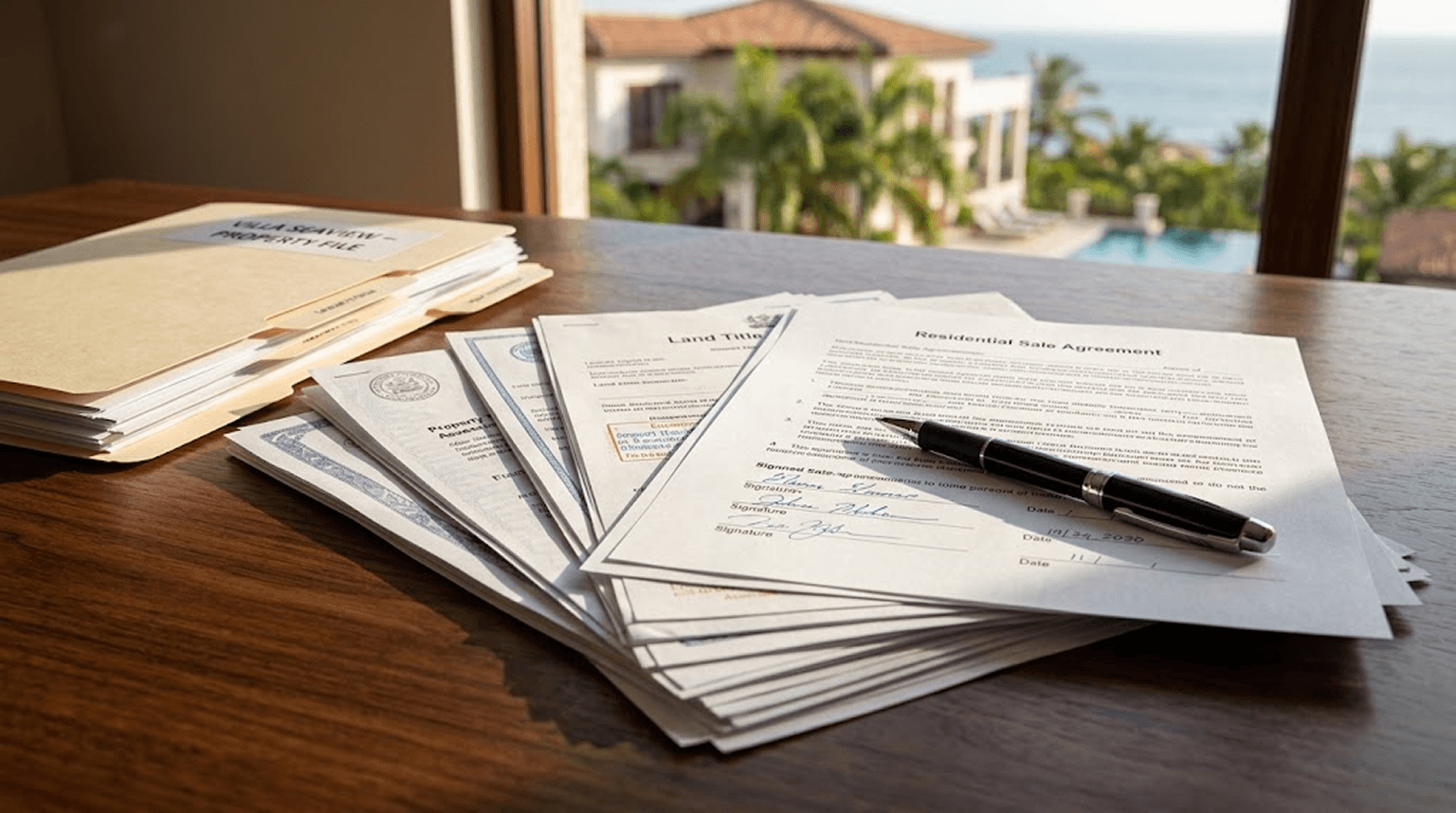
FET — the foreign exchange transaction form
The FET (Foreign Exchange Transaction form) confirms that foreign currency was brought into Thailand through a bank or a licensed exchange and converted to baht through an official channel. Without it, the Land Department won't register a freehold transfer to a foreign buyer.
In practice, Thai banks issue this form for transfers of USD 50,000 or more in a single transaction — a figure cited by the banks themselves and by property-law sources (Kasikornbank and Bangkok Bank, for instance, issue the FET on the spot at a branch for transfers at or above this amount, usually the same day you apply). It's worth being clear about what this figure actually is: it's established banking practice, not a threshold set out in a separate published Bank of Thailand regulation. The Bank of Thailand's own exchange control framework does document — in writing — a higher, related threshold, but for a different requirement: asking a customer for supporting documents on the source of funds:
These two figures carry different weight: USD 50,000 is a practical threshold reported by banks and lawyers, not a separately published rule; USD 200,000 is the threshold the Bank of Thailand actually documents in writing, for requesting supporting documents. It's still worth confirming the exact paperwork with the receiving bank and the developer for any specific deal, since internal bank procedures can vary in the details.
One detail worth knowing: the FET is issued specifically for funds that arrived from abroad in a convertible currency. If the funds arrive already in baht — for instance, transferred through a licensed exchange service to a Thai account — the bank typically issues a Credit Advice instead, covered below.
Credit Advice — the bank's transfer confirmation
A Credit Advice is a Thai bank's confirmation that a specific amount from a specific sender has landed in the recipient's account — usually the developer's. It's written proof that the money actually arrived, that the amount matches the contract, and that the transfer can be traced back to its source.
Developers typically ask for a Credit Advice before starting the ownership transfer — it's their way of confirming payment actually happened rather than was merely promised. When a transfer falls below the threshold that would require an FET, the Credit Advice is usually the main supporting document instead.
Chanote — the title deed
The Chanote (formally, Nor Sor 4 Jor) is the strongest form of land title document in Thailand — the closest equivalent to a proper deed of ownership, issued by the Land Department. It defines the exact boundaries of the plot using GPS coordinates, rather than the rough description used in weaker forms of land documentation.
Before putting down any deposit, it's worth verifying the Chanote yourself or through a lawyer: confirm the document is genuine, the land isn't mortgaged or under dispute, and the seller is actually who the document says they are. This kind of due diligence is standard practice, and in Thailand it's usually handled by an independent lawyer — not the developer or the estate agent.
How EXFM fits into the process
EXFM doesn't replace a lawyer and doesn't issue the Chanote — that's the Land Department's job. But EXFM, as a licensed currency exchange service, is directly involved in the first two documents: we convert a buyer's funds to baht and transfer them to the developer in a way that lets the bank issue a correct Credit Advice in the buyer's name — since the funds land with the developer already in baht, the bank issues a Credit Advice rather than an FET in this case (see the FET section above). For more on how the payment itself works, see our guide, Paying for Property or Rent in Phuket.
We don't provide legal advice — verifying the Chanote and the sale agreement is best left to a Thai lawyer independent of the developer.