Exchanging US Dollars in Thailand
Bring dollar cash to Thailand and you'll run into the same problem most visitors do: banks and street money changers all take their own cut, and old or small-denomination bills get a worse rate. Here's how to exchange cash for baht through EXFM (formerly Fast Money Exchange), a licensed exchange service, without losing money on the way.
Why exchanging cash on the street isn't the best deal
Banks and street exchange counters will take your dollar cash, but the rate reflects their margin, and it's rarely the best one available — on top of that, the condition and denomination of your bills affect what you actually get. A licensed exchange office gives you one transparent rate instead of a patchwork of bank and street-corner margins, with no surprise deductions once you're at the counter.
How to exchange cash with EXFM
Message an EXFM manager on Telegram or WhatsApp, or leave a request on the site. A manager will confirm the amount and the exchange method, and you'll get baht one of two ways:
- at an EXFM office in Phuket — hand over your cash and get baht on the spot;
- by courier — for larger amounts, we deliver to your address on Phuket.
Our offices can handle any amount, including sums well above 10,000 USD — carrying that much cash across a border usually means declaring it at customs, so exchanging locally, in one visit, avoids the hassle of moving large sums of cash at all.
What actually moves the baht rate
The Thai baht tracks the US dollar fairly closely, so the rate shifts from day to day rather than staying fixed. We won't print a specific number here — it would be out of date within weeks — but a manager can confirm the live rate before you commit to an exchange.
What genuinely affects how much you walk away with:
- the amount — larger sums typically get a better rate than small, one-off exchanges;
- the method — an office exchange or courier delivery doesn't carry the hidden margins that street changers sometimes add at the till;
- the changer's transparency — EXFM quotes one rate for a given moment, not a rate that moves once you're standing at the counter.
Why bill denomination and age change your rate
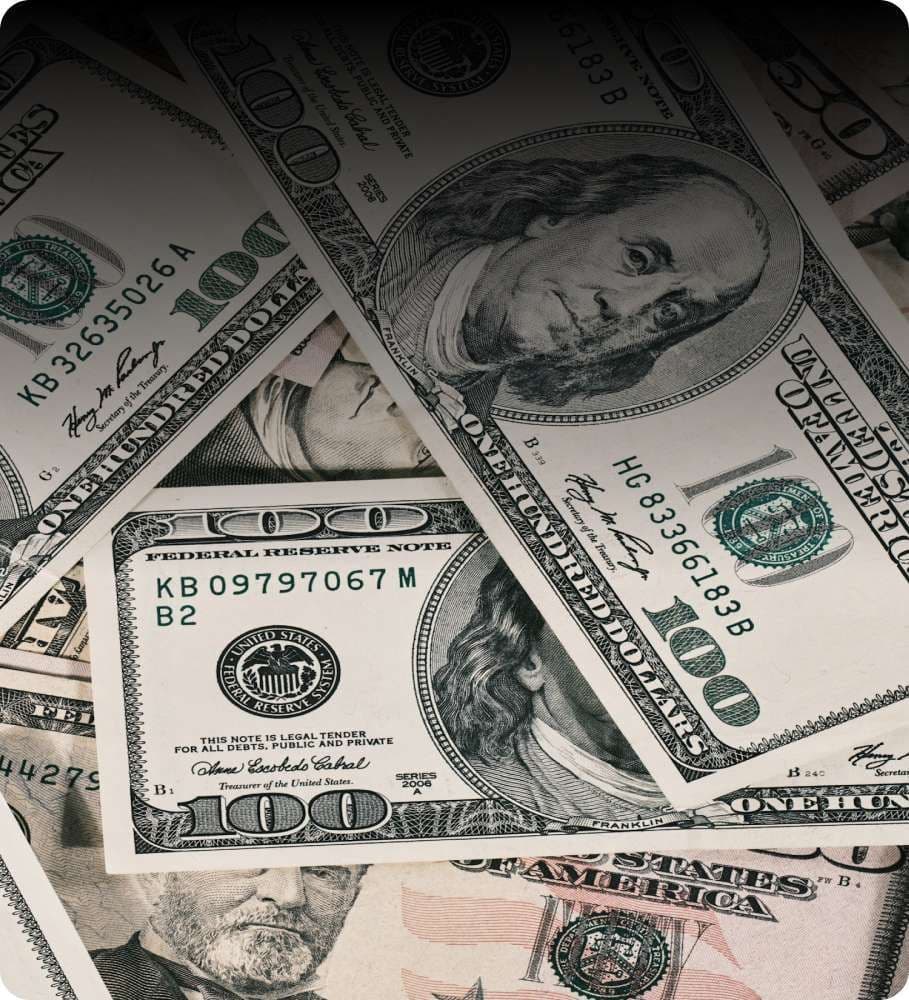
If you're bringing dollar cash, it helps to know that Thai exchange counters price bills differently depending on their face value:
- $1 bills get the lowest rate of any denomination;
- $5–$20 bills sit in the middle;
- $50 and $100 bills get the best rate for the person exchanging them.
The year a bill was printed matters too:
- bills printed before 1996 are rarely accepted by banks and licensed exchanges at all — you'll typically only find informal changers willing to take them, and at a poor rate;
- bills from 1996 through roughly 2009–2017 (the exact cut-off varies by exchange) often get a reduced rate;
- bills newer than 2017 exchange at the standard rate with no discount.
Bottom line: if you're bringing cash, pack $50–$100 bills printed after 2017 and you won't run into problems. Better still, skip the cash-condition guessing game altogether and arrange a cashless transfer with EXFM ahead of time.