Can a Foreigner Buy Property in Thailand?
Yes, a foreigner can buy property in Thailand — but not every type, and not always outright. Here's what you can hold in full ownership, what requires a lease or a separate structure, and what to check before you put down a deposit.
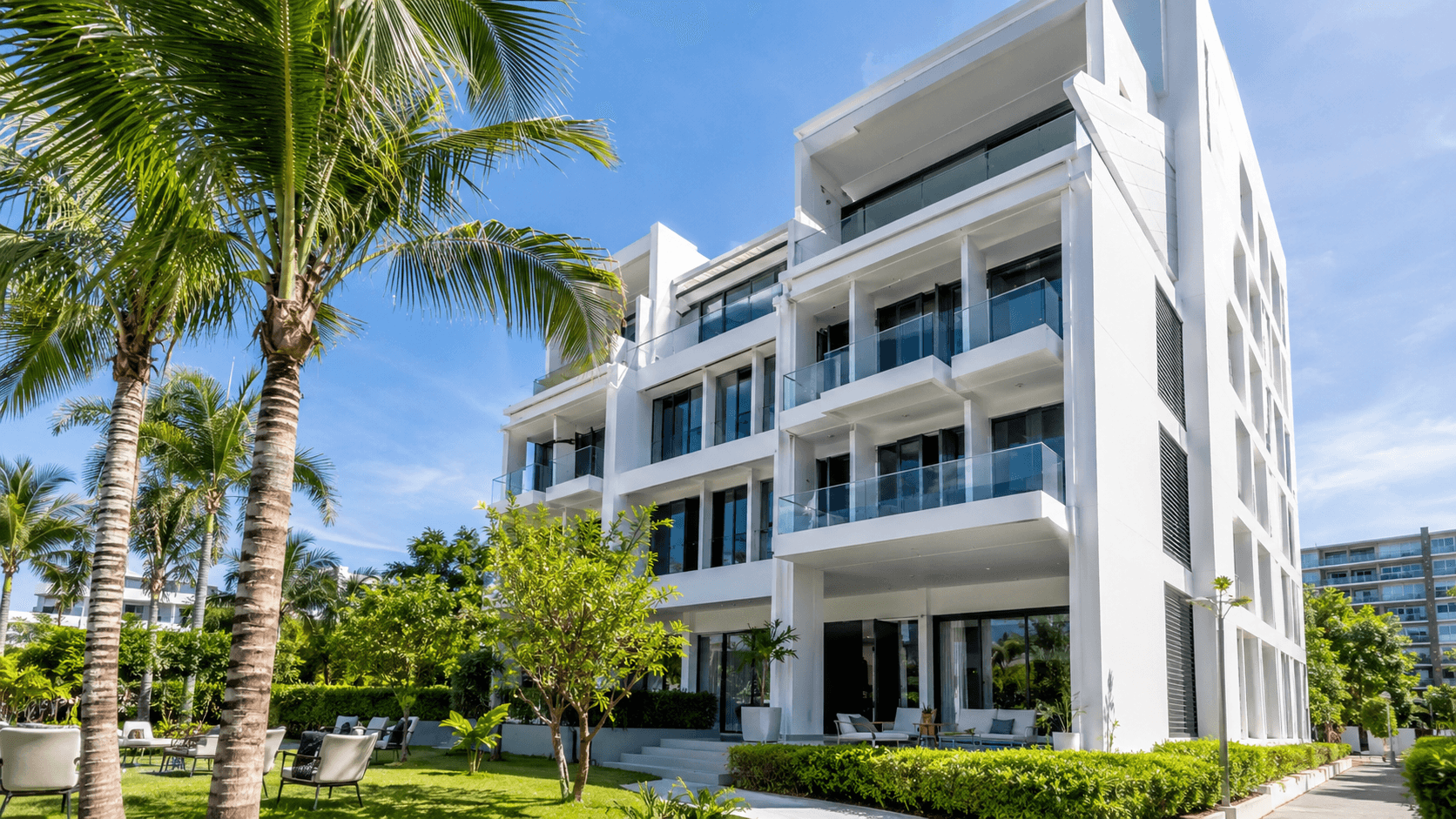
Condominiums — the most direct route
The one type of property a foreigner can register in full ownership (freehold) in Thailand, with no additional structure required, is a condominium unit. There's no lease and no company involved — the buyer registers as the owner directly, the same way a Thai national would.
The limit is on the combined share foreign owners can hold in a single building:
If that quota is already used up by other foreign buyers, a new unit can't be registered as freehold no matter how ready the buyer is — this is the first thing to confirm with the developer or the condominium's juristic person before any deposit changes hands. The mechanics of the quota are covered in a separate guide, Foreign Ownership Quota in Thai Condominiums.
Land and villas: why it's not freehold
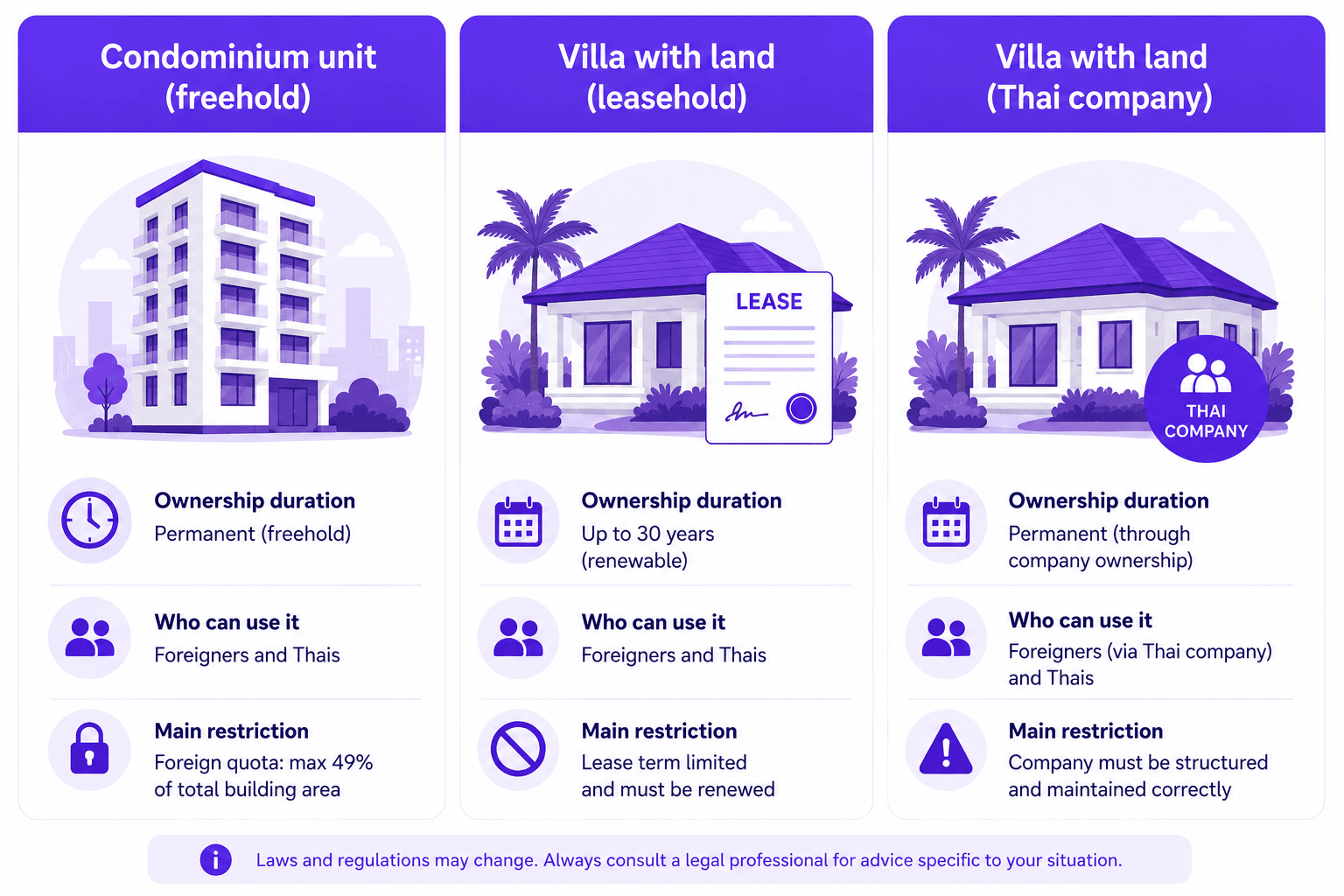
A foreigner generally cannot hold land freehold in Thailand — and that includes the land under a villa, even if the house itself was built specifically for a foreign buyer. In practice, buyers use one of two routes for a villa with land:
- Leasehold — a long-term registered lease, capped by law at 30 years at a time. The details, including the nuance behind the "30+30+30" structure after a recent Supreme Court ruling, are covered in Leasehold vs Freehold: The Difference When Buying Property in Thailand.
- A Thai company — the land is registered to a Thai-registered legal entity in which the foreigner holds shares or a director role. This is a separate and more complex area at the intersection of land and corporate law that calls for dedicated legal advice: the company structure has to be a genuine operating entity, not a vehicle used to get around land-ownership restrictions — Thai regulators specifically watch for arrangements like that.
The narrow exception: buying land directly
There is a direct path to owning land — but it's built for large investors, not a typical villa purchase for personal use:
The land has to be in a specifically designated area, and Phuket is one of them. In practice, approvals under this route are granted rarely: the decision rests with the Ministry of Interior, and the process is built for investors with already-structured, substantial capital rather than a quick purchase.
What paying for it requires
Regardless of the ownership structure chosen, paying for the deal requires official proof that the money was brought into Thailand legally and converted into baht through a licensed channel. For a freehold condo purchase, that's a condition the Land Department checks when registering the transfer of title; for a leasehold, it's the registration of the lease agreement itself. The three documents that typically come up in this process — the FET form, the bank's Credit Advice, and the Chanote title — are covered in detail in FET, Credit Advice, and Chanote.
Where EXFM fits in
EXFM doesn't handle the legal side of the transaction and doesn't choose an ownership structure for a client — those decisions stay with the buyer and their Thai lawyer. What EXFM does, as a licensed currency exchange service, is handle the financial part: converting a client's rubles or online dollars into baht and transferring them to the developer or an escrow account in a way that lets the bank issue a correct FET or Credit Advice in the buyer's name — without a trip to Thailand made just to handle the payment.
Further reading: the rules on foreign property ownership in the original sources — the thailand.go.th portal and the official website of Thailand's Department of Lands — dol.go.th.